Áo sơ mi chạy bộ
 Bộ mũi khoan
 taro
Bộ mũi khoét
Bộ mũi khoan
Bộ mũi khoan taro
Bộ mũi khoét
 Bộ mũi taro ren trong
 Bộ sửa ren
 Bôi trơn cắt ren
Cặp taro máy + mũi khoan
Bôi trơn cắt ren
Cặp taro máy + mũi khoan
 Dụng cụ bẻ chân ren
 Dưỡng đo ren ngoai
 Dưỡng đo ren trong
Mũi doa vát mép
Mũi khoan kim loại
Dưỡng đo ren trong
Mũi doa vát mép
Mũi khoan kim loại
 Mũi taro cho ren cấy
Mũi taro ren trong
Mũi taro cho ren cấy
Mũi taro ren trong
 Ren cấy V-coil
 Taro ren máy
Taro ren tay
Tay cấy ren
Tay quay bàn ren
Tay quay taro trong
Taro ren máy
Taro ren tay
Tay cấy ren
Tay quay bàn ren
Tay quay taro trong
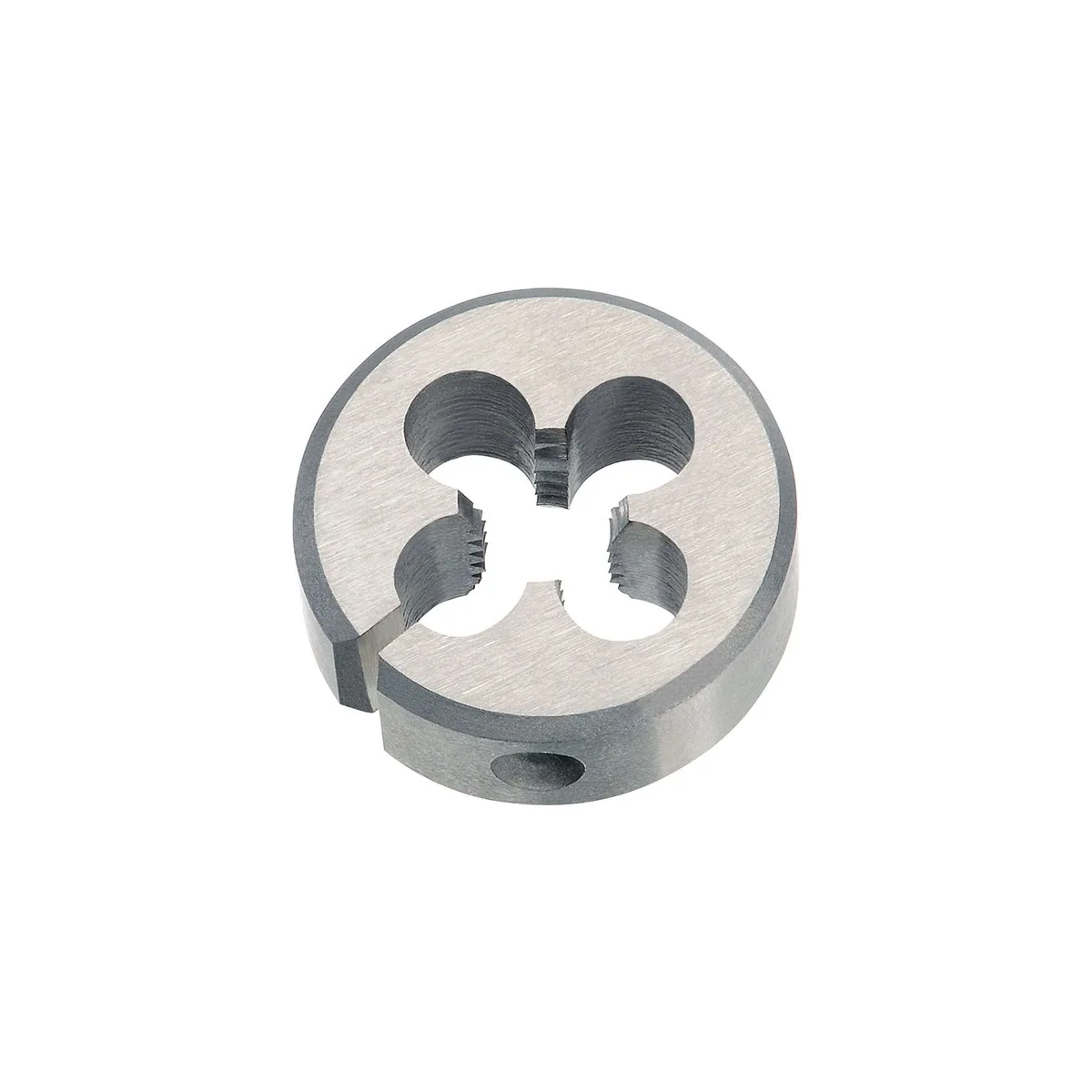

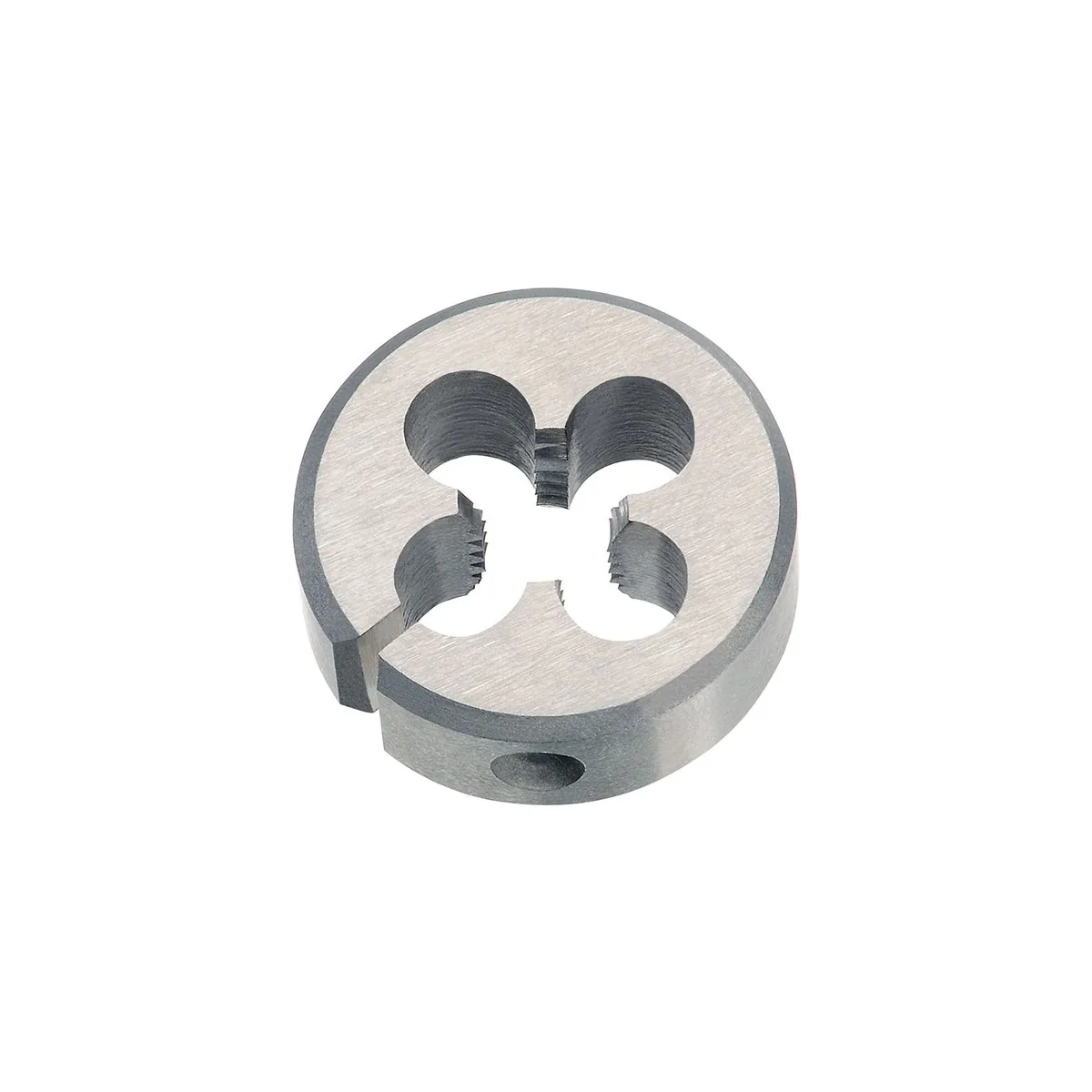
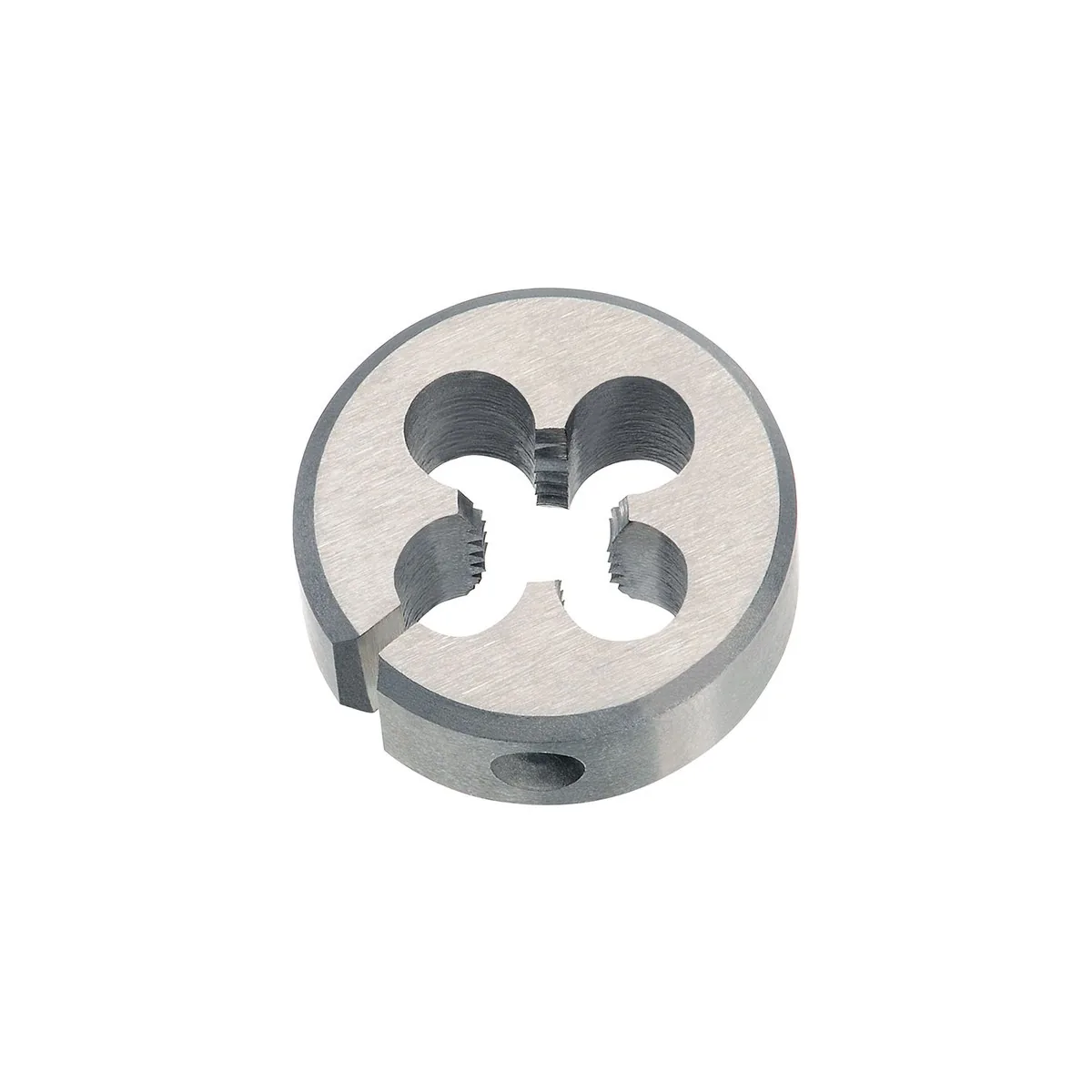
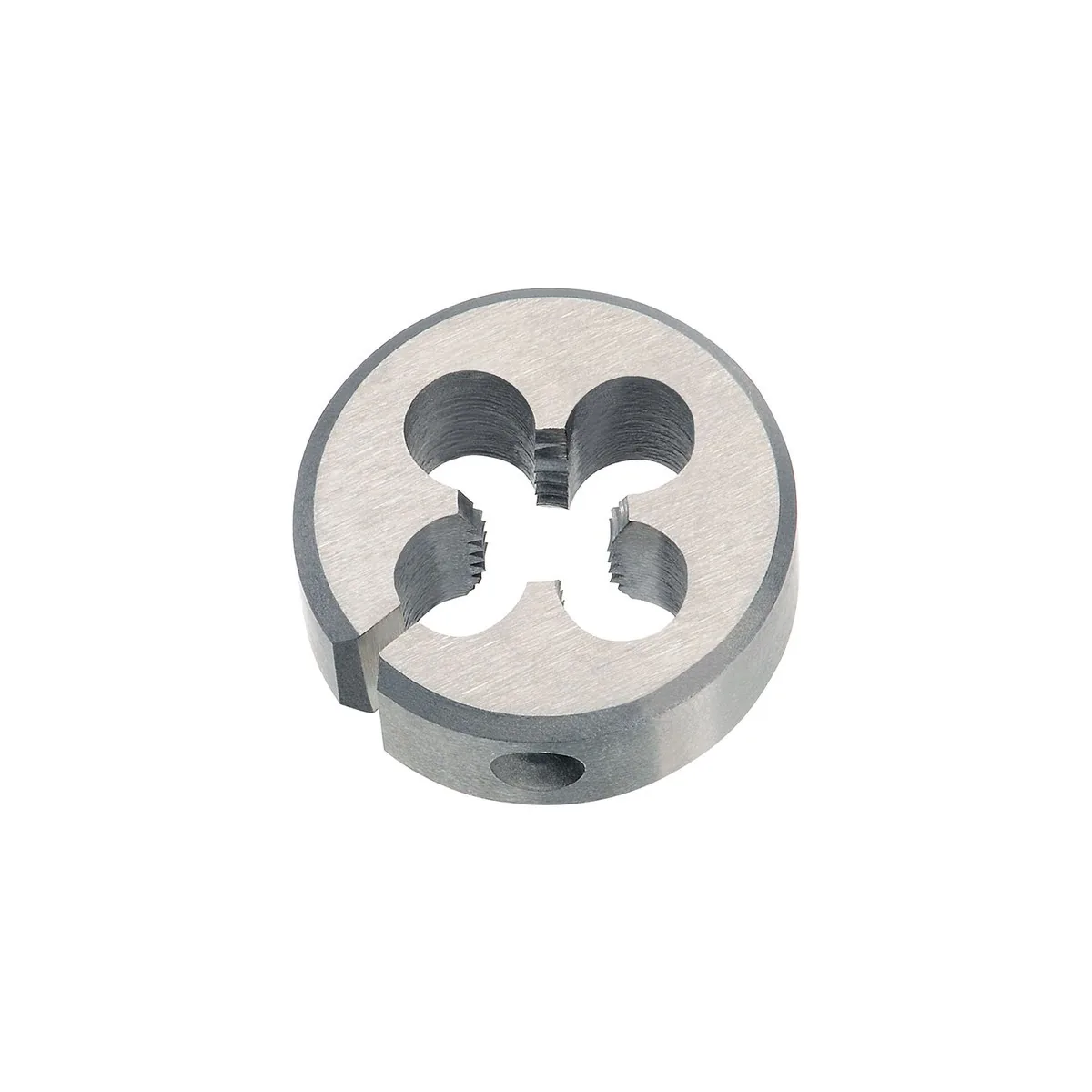
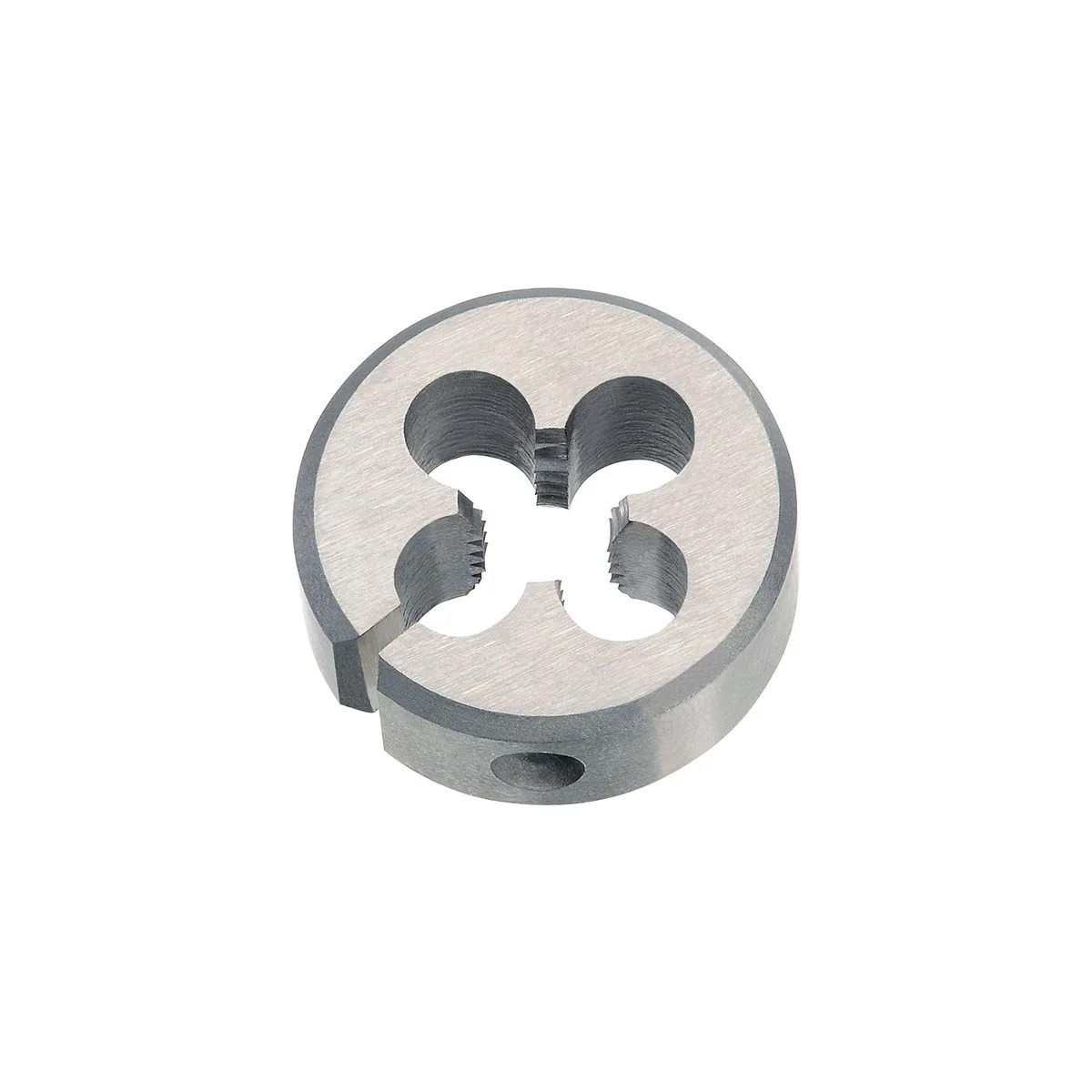
You use this round die to produce or restore external threads on shafts, studs, and fittings when you need a defined profile in the designation HSS - BSF 1/4 x 26. The tool follows BS 1127 geometry, which helps you align the result to the thread specification in your drawing.
For reliable results you align the holder square to the workpiece axis and use a lubricant suited to the workpiece material. Tool life and surface quality depend on material pairing, lubrication, and how consistently you keep the die guided during the cut.
Note Select the variant that matches the thread standard, hand direction, and tolerance requirements stated in your drawing.
Do you need help selecting or using the product?
Use the contact form.
| Type of thread | British Standard Fine Thread |
|---|---|
| Standard | BS 1127; 1950 |
| Form | splitted version (Form A) |
| Material | HSS |
| Tolerance | medium |
| Size | BSF 1/4 x 26 |
| Overall length (L1) | 3/8 Width |
| Outer diameter | 1" |
| EAN | 4022835850106 |
| Item number | 85010 |
| Thread standard | BS 84 |
| Rec. Bolt diameter | 6.25 mm |